|
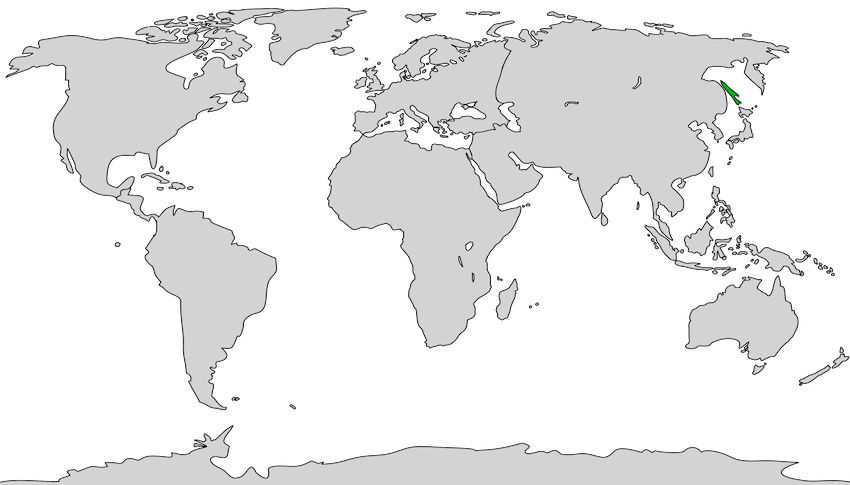
Introduction Homonia is the homeland for the world's gay people, established in 2040, which considers all of the world's homosexuals it's rightful citizens, though not all of them want to move there, of course. Homonia is a fascist, one-party state, committed as far as is possible to complete automony and independence. Aside from encouraging the gay people of the world to immigrate, Homonia takes almost no interest in world affairs - beyond the maintenance of a powerful but compact self-defensive military. The reasoning for this is that, as the rest of the world doesn't "want" gay people, they should not "want" the rest of the world, simply isolating themselves away on an island and getting on with life in peace. Homonia does maintain a somewhat "traditional" apperance, however. People dress surprisingly conservatively (but then again, it's freezing cold), architecture is traditionalist and even the cars people drive are almost entirely based on British designs from the 1920's to 1960's, with the only concessions to modernity being better heaters... and the fact they actually start when you turn the key. There are, of course, modifications to this traditionalism, pornography is openly sold pretty much everywhere, and brothels and sex clubs, from the modest to the theme park-sized, operate with complete legality. |
|
History Homonia was founded in 2040, though "homonian" settlement of the southern half of the country began as early as 2023, shortly before the conclusion of the Third World War, when the new Christo-Monarchist Russian government implied they would "turn the other cheek" to Japan's territorial claims over the southern half of Sakhalin. Most of the earliest Homonian settlers were Russian, and the Christian Russian government began to internally deport it's homosexuals to the northern half of the island, with the expectation they would migrate south. At the same time, Homosexuals were fleeing the nascent Northwest Aryan Republic (NWAR), with little more than the clothes they wore, escaping from the National Socialist frying pan into the American fire. The great revolution of 2014 had re-legalised hate speech across Europe, and the wave of nationalism and traditionalism was causing more of an active backlash against homosexuals in Japan, too. A remark by a Japanese homosexual campaigner that they "might as well be Ainu" saw many Japanese homosexuals half-jokingly head north, too. Though most stopped at Sapporo... to begin with. Kenji Korsakov, a half-Japanese resident of that southern Sakhalin town, began to work as a go-between between these two groups, whilst the Japanese government was involved in negotiations in Moscow. They really only expected the small Kurile Islands to be returned, but were surprised by the Russian government's willingness to hand over Southern Sakhalin too, especially given the number of Russians "choosing" to move onto the island. Of the three factions involved, only Japan was actually open about thier intentions. A large number of Japanese "tourists" began "visiting" Yuzhno-Sakhalinsk, the capital city of the island. A new Russian nationalist movement began to ramp up tensions about them, calling them "foreign conquerors already eyeing up the spoils". In fact, both groups were controlled by Kenji Korsakov, pretending to threaten a race war in order to make the two governments more cautious. A third faction, NWAR refugees who had crossed the pacific to Japan, also headed for Sakhalin, citing largely nonexistent "Yamato supremacism" as thier excuse for fleeing to a White country. Kenji Korsakov was behind them, too. These left-wing campaigners opposed the fake Russian nationalists, who had by now recruited genuine nationalists, and were keeping a close eye on them. Finally, the infamous Treaty of Moscow in 2039 saw Southern Sakhalin given to Japan on January 1st 2040. It was the shortest-lived territorial claim in the Japanese Empire's history. An immediate backlash from the Russian nationalists saw terrifying footage, uploaded to the internet by Japanese vloggers, of machine gun fire being sprayed indiscrimnately and sinister black-clad death squads stalking behind low walls and wrecked cars, start to appear. Nobody appeared to notice that none of this violence was actually hurting anybody, the gunfire was all aimed into the air, and the shot-up cars looked like they'd already sat in a scrapyard for 20 years before the shooting. Homosexual infiltrators in the nascent NHK Sakhalin began to bandy about inflated death figures and completely fictional horror stories of classrooms full of Japanese children being massacred. The fact no Japanese schools had yet been set up ended up being neither here nor there. The truth has a habit of getting buried if you can get a few birds to turn on the waterworks on telly. The genuine Russian nationalists prepped for thier own attacks on the Japanese, only for their "comrades" to turn on them. Footage of these actual dead bodies was taken from many angles and repeatedly recycled, whenever the media needed a "human cost" to display. Two certain Russian skinheads portrayed no fewer than thirty pairs of brothers, friends or lovers after thier death. Photoshop and video filters can work wonders. The deaths of the Russian nationalists were attributed to the Free American Army, a group of homosexuals who had been driven out of the NWAR. This group started campaigning for the whole of Sakhalin to be hastily handed over to Japan, to stabilise the Sakhalin government and "hold back the forces that have already taken our home from us". Russia and Japan hastily agreed, both governments eager to make a public demonstration of anti-NWAR sentiment (though both actually supported it in secret). Once the whole of Sakhalin came under nominal Japanese control (though was still in a transitional phase, with minimal control from Russia or Japan), the three "separate" factions "united under the brilliant orator", Kenji Korsakov... though they had, in fact, always been united. The Japanese contingent also took up arms, the three groups marched on the Sakhalin Museum (a Japanese-style building in Yuzhno Sakhalinsk, and nominal seat of the new Japanese prefectural government), and presented a declaration of independence. The Japanese government were taken completely by surprise, and initially resisted, but other members of the Japanese contingent were lurking near the remaining Russian police and military installations, poised to commit terrorist attacks. The Japanese government were worried such an attack would be blamed on them, and cause Russian retaliation. Actually the Russians had also been presented with an ultimatum, pointing out the advantage of having a place willing to take homosexuals off thier hands "next door". A hasty three-way conference saw the Turing Declaration signed on the 21st of January 2040. Japan had held Sakhalin for less than a month, and the declaration was the last political act performed in Yuzhno Sakhalinsk, the city being immediately re-named Turing in the declaration. Homonia was initially a democracy, with a parliament and a senate. The messy first election, conducted in two different languages, saw the Radical Nationalist party, led by a certain K. Korsakov, virtually swept the board, taking all but two seats in the parliament and every senate seat. Prior distribution of it's less-violent members saw it take some rural constituencies uncontested. The members of parliament representing said constituencies were sometimes the only people living there, in caravans. The need for a "better democracy" saw the adoption of a Homonian language become the first item on the parliament's plate. Russian was the obvious first choice, but much of Sakhalin's original population were already leaving in disgust, claiming "Japan was bad enough, but we don't want to stay on an island of perverts". Most moved to Magadan, an Eastern Russian city, though others started setting up a new city, Sakhalina, on the coast, almost within sight of thier former home. While it looked as if Russian would become the Homonian language regardless, Japanese was also on the table. Some signage had already gone up in that language, and schools had been teaching it intensively for about 5 years. Kenji Korsakov actually favoured Italian, many joking he was a "closet" admirer of Mussolini, while smaller factions wanted Latin, Chinese or even a formally-organised, fully functional version of Polari. In the end, with English still just about the "global language", and Homonia intended to be a safe haven for the world's homosexuals, it was this language that was adopted. Most of Homonia's politicians had only a rudimentary grasp of this language, and misspoken lines in parliament and the senate were a source of unending fun for foreign comedians for a good five years afterwards. |
|
Political System Homonia is governed by a fascist political system, as mapped out in the Fascist Manifesto of 1919, with a few modifications. There is no single "Il Duce", but rather a rotating semi-elected president. The parliament, known as the Council, has three houses - The Chamber, the House of the Workers and the House of the People. The Chamber has just five members, two elected by the members of each lower house, and one elected by the members of both, the latter being the president. The two lower houses are elected by the people - the House of the People is elected by constituencies, much like the current British House of Commons. This is the lowest house, and the one in which legislation is born. The House of the Workers is not elected by constituencies, but by "Guilds". The guilds are a sort of state trade union, in which every worker in a certain industry is automatically enrolled. The workers in engineering, for instance, go into the Engineer's Guild, those in construction go into the Construction Guild. Campaigns for parlimentary seats and elections are held in much the same way as they are for high-level union representatives. Each guild sends two representatives, chosen by the Alternative Vote system, to get a balance of the two largest opposing views Legislation approved in the House of the People (major decisions are, more often than not, sent back to "the lowest house", eg every single voter, in a referendum) is sent up to the House of Guilds. The members there are, by design, well-versed in their respective profession, and thus form a body of experts who can analyse the feasability of any proposed legislation, EG is a new railway possible? Will a proposed prohibition be workable? The members who have the most knowledge on a piece of legislation can then make the case for or against it to the rest of the house, who then make an informed vote on the matter. If it's denied, they can vote to either send it back down for modification, or rule it unconstiutional, and throw it out entirely (though a re-worded version can be sent again, the process has to start from the beginning). There's no limit on the number of times legislation can be sent back down for changes, or thrown out, but if the House of the Workers keeps dumping an idea which is obviously popular enough for "the people" to repeatedly propose it, it might have drastic consequences for the sitting members at the next election. Once legislation has passed the House of the Workers, it goes to The Chamber. The members here are primarily elected from among their peers for their expert knowledge on the constitution. They debate it a third time, deciding if it obeys both the letter and, most importantly, spirit of the constitution. They then vote on it, with the president having the casting vote in the event of a tie. The president then signs the new bill into law. Though Homonia has a democratic government, it is a one-party state. The party has no policies of it's own, except obedience to the constitution, and any party member may stand for office. Party membership is voluntary, but comes with a general code of conduct members are expected to obey, it also gives free entry to party rallies and events (though smaller, more informal ones might ask for voluntary contributions towards expenses), and supplies a uniform that can be worn at those rallies. The uniform is also counted as "formal dress", and gives admittance to any event that requires it (top-level resturaunts, film premieres etc). Party membership also gives people the vote, non-members are simply presumed to have no interest in politics, though apart from that, citizens and party members get equal rights in all other respects. Naturally, non-citizens cannot join the party. The party also controls the various branches of the military (Army, Navy, Air Force, Air Navy, Space Force) as well as the Police, Medical Service, Fire Service and Rescue Service (who administer lifeboats, mountain rescue and cave rescue, depending on their location). All of these branches are technically parts of one organisation, called SEC-DEF (Security and Defence), and they all have equivalent ranks (a private in the army is a constable in the police, etc). The party civil arm also has "ranks", though these are more ceremonial (apart from the Commisar). The civilian ranks are: Cadet, First Cadet (for young members), Cadet Leader (for adults who lead the cadets) / Full Member (for other adult members) and Special Member (for party members who have some sort of special expertise or training). The civilian "officers" are Kommisar (equivalent to a Kommisar in any other branch, it is the lowest officer rank, beneath Third Lieutenant), Representative (for politicians), Upper Representative (for members of The Chamber) and President (who may also be ceremonially called Il Duce). The final civilian position is Distinguished Citizen (DC). This is a "high" rank, but a powerless one, afforded to citizens who have served the country in some notable way. In formal contexts, they are given the respect (salutes, etc) due a general. |
|
Geography guff |
|
Turing - Capital City Turing is one of the largest cities in the world, and the largest modern city which is not expanded by shanty towns and slums. It covers the entire east-west portion of the southern part of Sakhalin, and extends from the southern tip of Cape Crillon to around 80 miles northwards inland. Industry is concentrated around the sea and the south, the centre, around what was once Yuzhno-Sakhalinsk, is the central businesses and shopping area, and most of the rest is urban residential areas, with the north being given over to more "spread-out" suburbs. When Homonia first opened itself to gay immigration, a large part of the peninsula ending in Cape Crillon was hilly and with only a few dirt tracks. The hills were blasted flat(ter), and the rock used to fill out a number of artificial rectangular extensions to the land, which jut out into Aniva Bay and form the vast port complex of Turing. The most historically significant Russian (and Japanese) buildings have been kept, and turned into museums or monuments. Otherwise Turing is virtually a brand-new city, with a street layout unashamedly intended for a car-based society and grand, imposing buildings. The central areas of Turing have neoclassical architecture everywhere, resembling Soviet Moscow at the height of it's power (to say nothing of Greece and Rome). Even the skyscrapers have windows framed by miniature Ionic and Corinthian columns, though after the first three floors or so, they're fibreglass moulds, not actual stone. Streets are very wide, with multiple lanes for cars, parking lanes at either side and dedicated cycling areas, seperated from the motor traffic. The main streets are all at 90-degree angles, meeting at vast roundabouts containing grand statues and fountains depicting what one or other of the meeting streets is named after. The ends of the main streets are framed by giant ironwork "gateways", with the name of the street and appropriate motifs. These also function as pedestrian bridges, other crossings tend to be underground, so the flow of traffic isn't interrupted. The underground tunnels also contain connections to underground railways, small "kiosk" shops, and art displays. The parking lanes are broken by bus stops, so buses can pick up passengers without interrupting other vehicles. Away from the central main streets, smaller streets with just four lanes (one parking, one traffic, in each direction) form the rear areas of the bigger buildings. these are filled in with more modest, but still neoclassical, buildings, given over to small, privately-run shops, bars, resturants etc. Multi-storey car parks abound, as do small city-centre flats. Most of the "more modest" buildings are around 4-5 floors, with the business only on the ground floor and small flats above, though other areas have multiple tiny shops or bars on every floor (like Japan). Between these buildings, there are mews with garages for people to park thier cars in. These mews are also cycle lanes, with very low speed limits for motor vehicles, allowing cyclists and riders of small mopeds to have a safe journey across the city. Away from the centre, the residential areas are broken up into small sectors with distinct architectural styles, including classical Japanese, Tudor and Stuart, Georgian, Victorian, Art Deco, Art Nouveau and Googie. This does not reflect any racial ghettoisation, however. 99% of Homonian housing is assigned by the Ministry of Settlement, not chosen by the residents. The distinct architectural areas are no more than a few blocks each, and the houses or small blocks of flats are all quite narrow, giving people a variety of things to look at. The residential areas also have quite wide roads and pavements, but these move through a number of squares and terraces with ample parking spaces for the residents, as well as tiny parks, convenience stores and koban. Behind most houses there are, again, mews with garages. In the residential areas with older architectural styles, the local railways tend to run underground, but in the Art Deco areas, they run above ground on appropriate-looking arches. As well as extensive provision for cars, Turing has many underground railway lines, overground monorails serving the Art Deco districts (which dip underground in the centre), a regular bus service using Routemaster-style buses, and in certain areas a tram service using Baloon-style trams, of the sort that served in Blackpool for around 80 years. The trams tend to run alongside rivers, in the middle of very wide streets, or in other areas where they won't be too impeded by other traffic. In keeping with Homonia being a country filled with people most of the world hates, under a political system the entire world hates, the underground railways are very deep, doubling as bomb shelters. The trams and underground trains also carry batteries, allowing for limited operation if the electricity fails. Most buildings also have deep cellars with multiple exits, or connections to other cellars and tunnels. Even the cellars of houses are designed with weak points in the walls, allowing for the walls to be broken down if people become trapped in one. Every garden has it's one-way, armour-plated hatch, allowing escape if the house has collapsed. |
|
Rural Areas, Small Cities guff |
|
Economy guff |
|
Public Transport guff |
|
Society Not wanting to imitate the petty despotisms of early-21st century Western Europe, where the full force and apparatus of the state was frequently used to crush somebody for making an off-colour joke, Homonia allows it's citizens a huge amount of freedom. They can say or publish pretty much anything they want, own all sorts of firearms, start businesses and, on the motorways, drive at any speed. That being said, religion and it's promotion are completely banned, businesses must serve the state above all, and buildings must be in keeping with Homonia's appearance. It goes without saying that Homonia allows homosexual and plural marriages, though few people take the state up on the offer. Swinging and swapping are pretty much the order of the day, and seedy bars, porn cinemas, "bath houses", brothels and even giant sexual "theme parks" are dotted all over the country, operating completely openly. Racial and gender discrimination at these establishments (and any other business) is completely legal. It is perfectly fine for a bar to be decked-out in NWAR, or even outright Nazi, imagery, and bar entry to anybody but fit young White males. What those White males get up to inside would scandalise the actual NWAR, of course. And the owner would probably be best friends with the owner of the bar next door, with a window full of Kwanzaa candles and pictures of Malcolm X. Most of these free sex establishments don't bother discriminating, though, especially not the big ones; everybody has the same money in their pocket. That Homonia is a world leader in researching and manufacturing cures for STD's should also go without saying. Thanks to Homonian research, all of the most severe ones which plagued the world for centuries are now little more than minor annoyances. Gender transition surgery is another facet of Homonian medical science which has made huge leaps. It is now possible for nano-surgery which rearranges a persons genitals, facial structure and body hair development at the cellular level. A few people even get "recreational" gender reassignment. Cosmetic surgery for anything other than gender reassignment, or the correcting of birth defects and severe injuries, is highly discouraged and considered unpatrotic, though. After the foundation of Homonia, a large number of private surgeries dedicated to cosmetic surgery were opened up, the wealthy owners bringing in a huge array of world-class surgical equipment and expertise... which was then all seized and nationalised for genuine medical needs once the fascist system was established. Why, it's almost as if the government planned it that way in order to get a bunch of hi-tech medical gear for free! Most Homonians are members of the party, and regularly attend party functions of greater or lesser size. The alcohol generally flows at the smaller ones, they're more like nights out at the pub, with more Roman salutes. The larger ones are more serious. While party membership is voluntary (and comes with a code of "honourable conduct"), it's strongly encouraged, and people usually assume other people are members in conversation. Party propaganda and "reminders to members", really directed at all citizens, are everywhere, all painted up in dramatic Socialist Realism style. Loudspeakers on the major streets in cities and towns belt out propaganda anthems during the daylight hours. These are all in a genre best described as "Pop Classical", all soaring strings and bombastic brass, with deep-sung lyrics about loyalty to one's comrades and thundering chourses for everybody to join in with. The music is interspersed with yet more spoken advice to citizens and propaganda slogans. Placing a great emphasis on scientific progress, the Homonian state media always ensures the latest breakthroughs, and the scientists behind them, make the top stories and not the "...and finally"'s. Great museums and "science galleries" are also set up to educate citzens on the latest research being done. This is accurately interpreted by trained expert science communicators, and not left up to the guesswork of Emma who studied Leisure and Tourism and was really hoping to get the all-expenses-paid package holiday review gig. The entertainment arm of the state media is similarly a science-and-nationalism glorifying propaganda mill. Films produced by it almost always end with conflicting people agreeing to work together for the betterment of the state and Homonian people, ending with a pan up into the sky and rousing nationalistic propaganda song. Many of them are even in black and white (as, indeed, are entire TV channels). Aside from the state media, though, independent production companies and publishers may also set up (many even receiving cultural grants from that same state). The biggest of these rival the state media on private earnings alone. With the scientfic progress part said, Homonia does insist on maintaining a simple, "primitive" way of life for citizens. Tablet computers, smart phones and ebook readers are heavily taxed, to the point of being almost unaffordable, as they are "twattish". Evading "twattishness" is a high priority for the state. Satnav, self-driving cars and automatic parallel parking systems in foreign-built cars must be removed before a car is imported to Homonia. Homonian cars, naturally, don't even have them to start with. Homonian televisions, radios and computers often have old-fashioned looking cases, though the machine inside is up-to-date. Homonian TV's even look like old CRT models, though the space in the back is actually occupied by high-quality speakers. Remote-control TV's are also banned (more avoidance of "twattishness", and citizens will get fit walking an extra mile a year). Homonian TV has 10,000 channels, selected by four knobs which can be set from 0 - 9 on the front of the box. No channels can ever be "locked out", the few children people have in Homonia avoid seeing porn and horror by being put to bed at a decent time by parents who actually pay attention to parenting. Or they just see the porn and horror anyway, so fucking what? Kommisars In the Soviet Union and other Communist countries, the Commisar was a very powerful individual, with an equivalent military rank of Major, and in civil life, the ability to negate the wishes of the police and haul whoever off to the Gulags for whatever crime they wanted. The Nazi German Kommisar was a similarly fearsome individual. The Homonian Kommisar is a far more benign figure. They hold the lowest officer rank, beneath Third Lieutenant, or equivalent. Outside the police, Kommisars are more like officer cadets, within the police, a Kommisar works in a Koban, or at the front desk of a bigger police station, getting on-the-job training for larger commands. The civilian Kommisar is more interesting. They are more like a civil servant, parish councillor and "community leader" in one. All are party members, and organise thier local chapter of the party. And it really is local, any residential street or medium-sized block of flats has it's own Kommisar. The door of the Kommisar is always open, people can come to them for advice on matters about the party, the law, local or international politics or even just events and things going on in the area, party organised or otherwise (eg bands on at the local pub, a nearby small shop's anniversary sale etc). The Kommisar, in turn, gets to know the local people and can, if need be, advise the police on a local who matches a description, or other such prying purposes (at least Homonians can access the entire internet freely). But the Kommisar's knowledge has other useful purposes; if the party wants new sculptures, paintings etc to brighten up a public area nearby, the Kommisar will know of an artist who lives right in that area. In a disaster, with injuries and damaged buildings, the Kommisar will know of the nearest doctor and builder who can help. Kommisar is the person's actual job, it's not something they do in thier spare time. Paying them all is one of the largest state expenditures, but they don't get to "sit at home, chatting to the neighbours" either. They are given training in psychology and body language, are regularly breifed on the doings of the state, and are also given rudimentary combat training, too. If Homonia is invaded, they are expected to organise local resistance cells, as well as give assistance and local knowledge to Homonian regular forces. |
|
Military guff |
|
Immigration The freedom allowed to Homonian citizens makes the country extremely vulnerable to terrorism, so this is countered by allowing resident non-citizens almost no rights at all. Anybody may visit Homonia as a tourist, but they can expect to be under surveillance the whole time, starting with fingerprinting, facial scans and an extensive luggage scan and search at the airport. Tourists do not book a hotel as such, they apply to the government-run hotel company, specifying a budget (from a series of ranges), which places they want to stay in, for how long, and the languages they speak. The company then writes back, specifying a hotel they can stay in. The rooms are all bugged, and they can be monitored by police officers who speak the language of the guests at any time. If they are overheard speaking an unspecified second language (or a second language they did specify, but did not put as their primary one) to an excessive degree, they are liable to find their holiday cut short, to say nothing of their luggage extensively re-searched. Homonian citizens, of course, can stay in any hotel they want, at prices specified by the management, and are not spied upon... unless foreign tourists visit their rooms - in which case, the police will also want to know why. Permanent immigration to Homonia is handled in a similar manner. There is nothing in between tourism and the intention of naturalisation - and dual citizenship is banned entirely. People wanting to leave their country for Homonia can apply at any Homonian embassy (even one not in their home country, as said country might not want them to leave). Once they have applied and been given an initial interview, they are immediately under the protection of Homonia, and are given a "passport" saying as much. They aren't citizens yet, though, but any other country or entity (such as their parents) that tries to mess with them will meet with diplomatic censure... at least. In extreme cases, Homonian special forces "snatch squads" may "unarrest" prospective immigrants in ID-less, deniable military operations. These snatch squads are most definitely licenced to kill. At the earliest opportunity, the prospective citizens are put on airships making the trip to Homonia, usually in a segregated section from tourists or business travellers. They may even travel in a small passenger section on a ship otherwise transporting only cargo. When they arrive, they are sent to "Integration Camps", which are in isolated areas and are set up to accommodate speakers of foreign languages, with all signage in the language of the new arrivals, and English. Speakers of "smaller" languages might be stuffed together in an unused camp, with new trilingual signs hastily thrown up. The main purpose of these camps is, of course, intensive English classes, and lectures on the Homonian political system, how to integrate into society, look for jobs, find the local Kommisar, and so on. But, as the immigrants are not yet Homonian citizens, and have no rights, these camps are also ninteen-eighty four come to life. Every room is monitored by cameras and microphones, and a whole bank of police agents watches everybody. The television is all piped in on cables, with channels especially designed for the camps broadcasting edgy dramas, pornography and blasphemy against every religion. The viewing habits of the new arrivals are all logged, to make sure they are what they have said they are. Police agents also act as fellow new immigrants, moving among them and trying to draw out anything suspicious. Officially, the new immigrants are told they are merely waiting for their "application to be processed" and for their "English to improve". Apart from these concerns, they are also being observed for any signs of religious belief, lies about their sexual orientation or evidence they are otherwise plotting against Homonia. Borderline cases are "entrapped" by the police agents acting as fellow immigrants, to see what they really believe. The same applies to suspiciously "perfect" cases, who step off the airship praising every aspect of the Homonian system. After a period of time ranging from 3-6 months, individuals will start getting letters telling them if their application has been approved or rejected. Rejected candidates aren't told why, but they are put on a flight to any other country for free, so may either go home, or claim asylum from persecution elsewhere. Borderline cases may reapply, definite enemies of the state are warned not to. The approved citizens are sent to far more open "Transit Camps". Here everybody speaks English, though still in a slow, basic and clear manner. By now the new immigrants have probably realised they are being watched, but it is made clear that the rooms have microphones in them, and excessive talking in foreign languages will be viewed as suspicious. Spies that speak these languages are listening in, anyway. Sometimes the new immigrants might just "slip", and it wouldn't be fair to bin them at this stage, if they really are talking about innocent stuff. In the Transit Camp, the immigrant's application really is processed. They are given a Homonian passport, the forms and whatever is necessary to renounce their previous citizenship (if they come from a country where they are not allowed to renounce their citizenship, they are reported to have died in Homonia), and are assigned a place to live. The housing they are assigned is based on their relationship, and the potential they have to contribute to Homonian society, a single person with no qualifications will get a tiny Japan-style one-room flat, while a doctor in a steady relationship (perhaps with somebody met in the camps) might get a whole house right away. Either way, there is no rent or mortgage to pay, almost all housing is the ultimate property of the state, and assigned out to people. Citizens can be upgraded if they make contributions to society, though can move to the same "grade" of housing (or lower!) that they already occupy, in any other area, with a simple application... and if it's available! The government does make a conscious effort to avoid "ghettoes" of any kind, though. Areas are deliberately kept with as diverse a jumble of races as possible, and even within those areas, the government avoids making people with the same origin immediate neighbours. New residents moving to an area are met by their local Kommisar, though newly-minted immigrants will be met by a Kommisar who has a full dossier on their qualifications, experience and level of trustworthiness. These documents get burned after the first meeting, though. The Kommisar can advise them on suitable jobs going in the local area (this also influences initial housing assignment. That doctor is likely to be moved near a hospital) or, if they have experience of successful self-employment, of new business grants and free premises that are available... and they go from there. The new citizen is now, of course, under the full protection of Homonia. Any attempt to return them to their home country by their government or family will be met with extreme force, and anybody attempting to take them back faces the very unpleasant prospect of Homonian prison. The ones who survive being arrested, anyway. |
|
Foreign Relations Homonia invites every nation to exchange diplomatic missions, though very few nations actually take them up on this offer. Russia and Japan have done, mostly because the country is on land still technically claimed by both. The fact Homonia is run by a fascist government that practises true atheism (as opposed to hatred of only Christianity) makes more liberal countries surprisingly reluctant to recognise them. Nations such as South Africa, Korea, London, Neue Europa and Aztlan, which profess love and tolerance for all, accuse Homonia of "kidnapping" their citizens. The latter does not normally allow exit visas, so is especially vehement about Homonia lying that it's citizens have died in the country. Homonian diplomats simply smirk knowingly and say there may be "errors in our records" and that these "illegal immigrants" will be "returned" if the police find them. The Homonian police, of course, make no particular effort to find still-living people who have only been given a foreign death certificate. While Japan, Russia and a few other nations are more than happy for Homonia to become a "dumping ground" for their unwanted homosexuals (the Caliphate doesn't try to stop them either, despite homosexuality being legal there), the NWAR, unusually, does not. The NWAR prefers to keep it's homosexuals and "laser their brains squeaky-clean", in a controversial procedure that allegedly turns people straight and has them producing White children in the manner God intended. The success rate of this procedure is debated, but almost no immigrants to Homonia come from the NWAR, which is, perhaps, telling. Space With the demise of NASA, ESA and the Chinese space agency due to revolutions and civil wars, plus the space exploration of other nations (eg Japan, India) going on the back burner due to the costs of World War 3 and the huge scattering of scrap metal in orbit by China's "Tibet Weapon" (see The Gun, part 2), the space agencies of most of the world united into the UN Space Agency. The most notable exceptions from the UN Space Agency are the NWAR (who are far and away the lead spacefaring nation, and the only nation to have cleaned up all of that scrap metal and made launches safe again) and Homonia. The Homonian space agency is, in the 2060's, still in it's infancy, and has launched only a few unmanned satellites. These are primarily concerned with weather and communications, and give the NWAR a wide berth. For decades after the founding of the NWAR, it and the USA had an ongoing "space war" fought by armed spy satellites, until NASA ran out of money and the UNSA, as a whole, wasn't over-concerned with NWAR traffic conditions. |